Imagine a world where our kids don’t have to go to a physical location for their education. Instead, they learn everyday at a time and place of their choosing and from an instructor of their own choice. They explore what they want to learn, and do so at their own pace.
In this world, kids instead of going to a designated place of learning, curate and experience learning in an environment of their own choosing, beamed to them electronically.
This world represents a power shift dynamic – from the educational institution imparting the learning experiences – to the learner who wishes to engage with a concept, a skill or a science. In this world, the learning experience is curated by the learner in conjunction with an expert educator, perhaps working with an AI platform that tracks every detail of the learning experience – progress, conceptual understanding, etc – and creates and environment optimised for flow. Here, each learner is unique and creates a personalised learning experience while engaging with building context from multiple perspectives and creating deeper meaning, in an applied context.
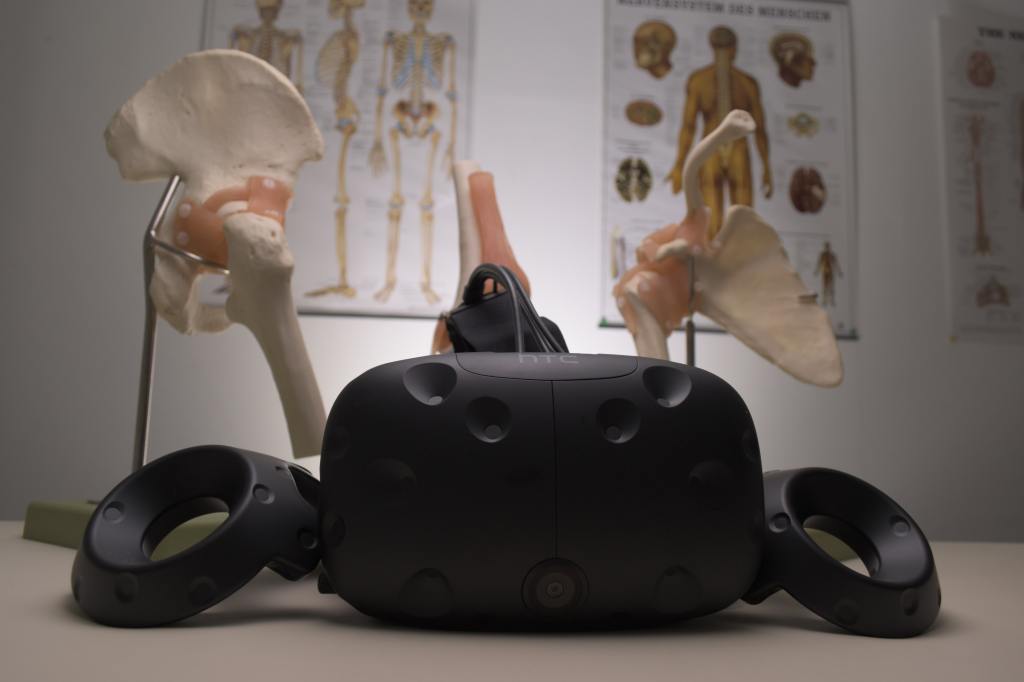
Does this all sound like sci-fi? Perhaps it did in the year 2019, but with the advent of COVID-19, this world has now become very real. COVID-19 has put 1.8 billion students in nearly 200 countries and territories out of school and the duration of the disruption is at best uncertain. Due to this uncertainly, there is a mad global scramble for restoring continuity in routine, in an environment dominated by social distancing and lockdown. The go-to solutions for providing continuity is predicated on digital technologies with students and teachers brought together in a virtual learning environment. Suddenly, virtual classrooms have centre stage, when a few months ago tech tools were at best an add-on.
But is this just a temporary response to a disruptive phenomenon? The terms “continuity in routine” seems to suggest so. It seems to suggest that when things go back to normal, then the system will reclaim the old ways.
I argue that this is certainly not the case – COVID-19 is a game changer, and it has turbo charged edutech like never before. Our approach to education will never be the same. The following factors contribute to this:
- More and more educators are conducting their classes online. Due to uncertainly in duration of the disruption and to ensure that students are gainfully engaged during this period, most countries around the world are trying to find distance learning solutions. As with any forced change, some may not be making this transition willingly and other are planning for the short term – but the fact that there is such large scale adoption of edtech cannot be ignored. Herein lies the catalyst. As practice makes permanent, the more we engage with technology in the classroom, the more proficient and creative we get in using it.
- Tech companies are scrambling – suddenly everyone is looking to them for solutions. Zoom’s daily users have spiked for 10 million before COVID to 200 million in March. Microsoft Teams and Google Meet (amongst others) have become buzzwords. Tech companies are now the central nervous system for business continuity. They recognise it, and many edtech companies are offering their education and meeting solutions for free. Today, edtech is red hot (perhaps smouldering is more apt), and if it this does not give them wings, I don’t know what will! These gains will be carried forward from here and they will continue to develop experiences that will push engagement and convenience needles to the extreme right.
- Kids take to technology like fish to water. They are digital natives, exposed to technology very early in their lives. They thrive on and are enthralled by technology, which has a multi-sensorial impact of them, firing their neurons at all cylinders. Frankly speaking, some of the stuff that is available right now (augmented and virtual reality, holographic technology, etc) makes me want to be a kid again. I can’t wait to see how these and other technologies will transform the way our kids will learn in the future.
Sceptics will argue that this world may not happen at all or that we are a long long way away. They argue that there are issues relating to socio-emotional needs of learners and with respect to access, affordability, equity, etc of the technological solution that need to be resolved. But I argue that human ingenuity knows no bounds. If we can imagine it, we can build it, and all of what I have written above has already been imagined.


 SANDEEP MAHAJAN
Leave a reply to Mohd Anis Cancel reply