Category: Governance and Policy
-

Digital by Design: Building Canada’s Competitive Edge
In a world of trade uncertainty and digital dependence, Canada must rethink how its businesses connect and compete. This post explores how open networks and digital public infrastructure can strengthen SMEs, boost resilience, and build a more discoverable, scalable Canadian economy.
-
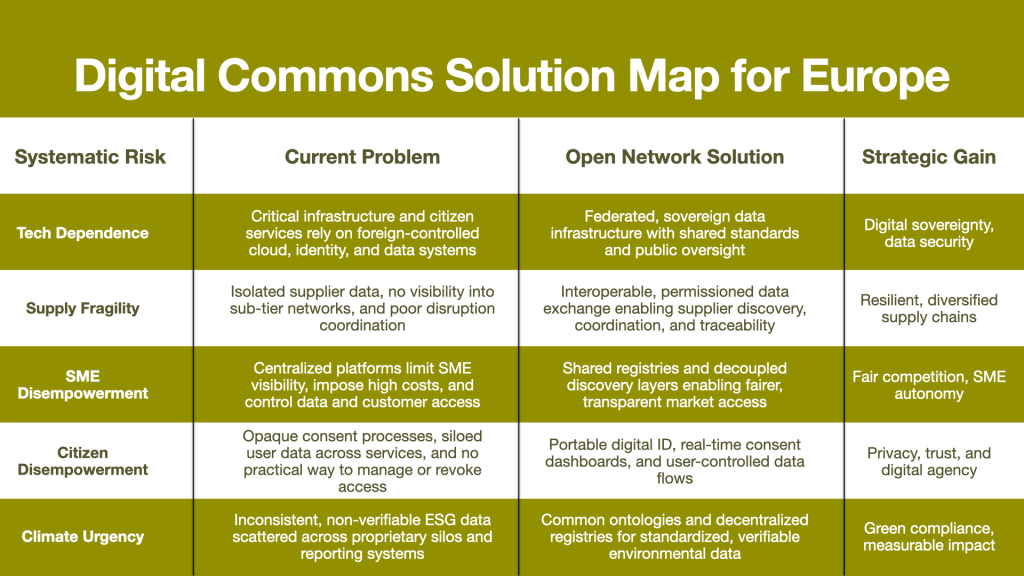
Open Networks: Europe’s Path to Digital Sovereignty
In an increasingly connected yet fragmented world, Europe is at a crossroads. As global digital platforms consolidate control over data, services, and markets, questions of autonomy, resilience, and inclusion are coming to the fore. To address these challenges, Europe must move beyond reactive regulation or isolated investments. It needs a fresh approach to digital infrastructure—one…
-
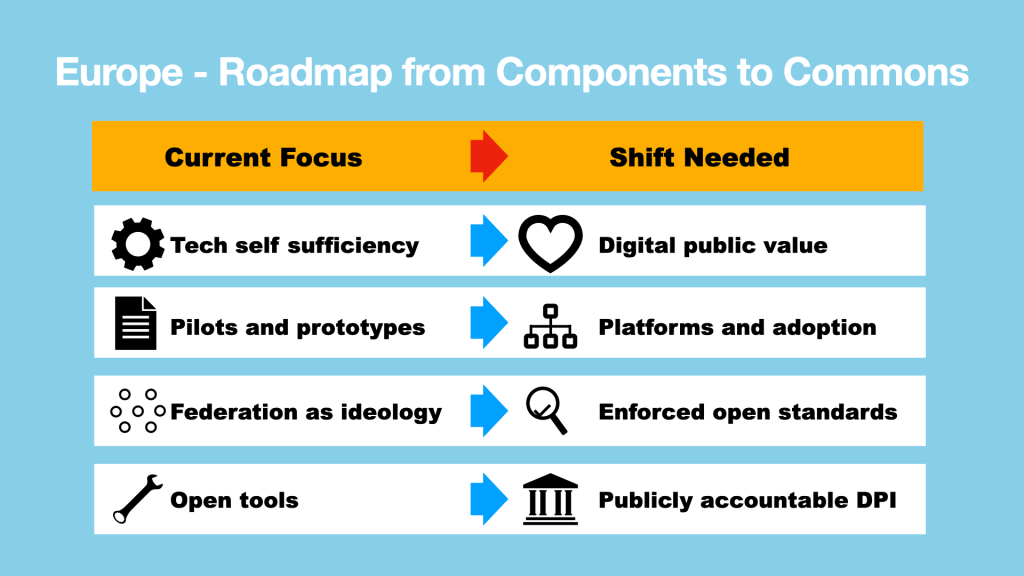
EuroStack: Why Europe’s Digital Stack Needs a Commons Mindset
This post builds on Part 1 of our series on Europe’s digital future, where we explored why open networks are essential to digital sovereignty, resilience, and fair markets. In this follow-up we examine how Europe’s current digital infrastructure measures up—and what it would take to transform it into a coherent, commons-governed system. In recent years, “digital sovereignty” has moved…
-

Architecting Soft Power: India’s DPI Story
For much of the 20th century, soft power came from cultural exports—cinema, literature, universities, diplomacy. In the 21st, a new dimension has emerged: digital infrastructure. Today, India’s rising global stature isn’t just about economics (5th largest economy in the world) or geopolitics (a regional counterweight to China, a key voice in forums like the G20…
-
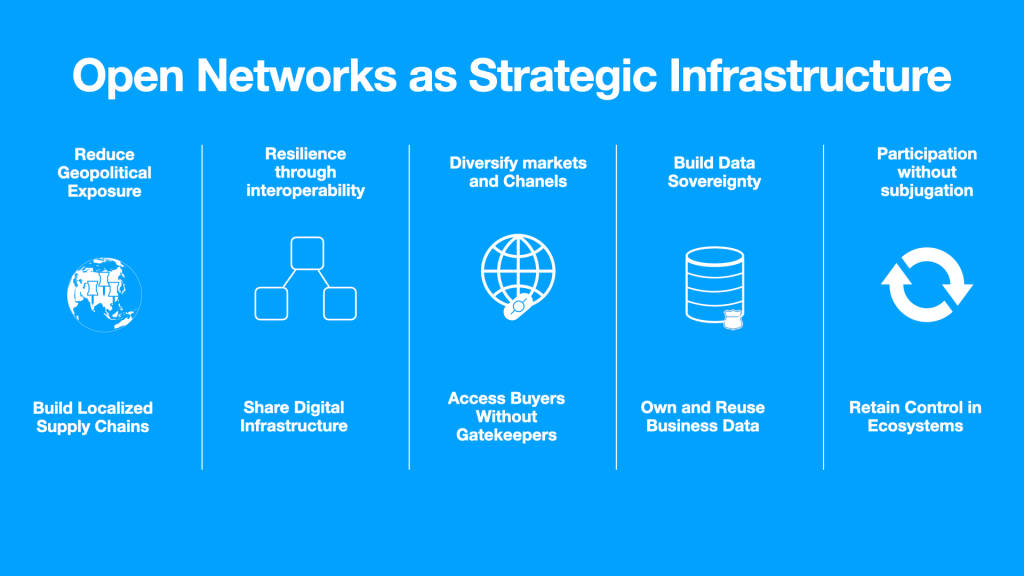
Why Open Networks Are Strategic Infrastructure in a Fractured World
We often speak of open networks as the future of digital transformation. But that framing may no longer be enough. Today, they must be understood as something more urgent: infrastructure for survival, resilience, and sovereignty in a world that is anything but stable. We are in a moment defined not by disruption, but by dislocation…
 SANDEEP MAHAJAN